
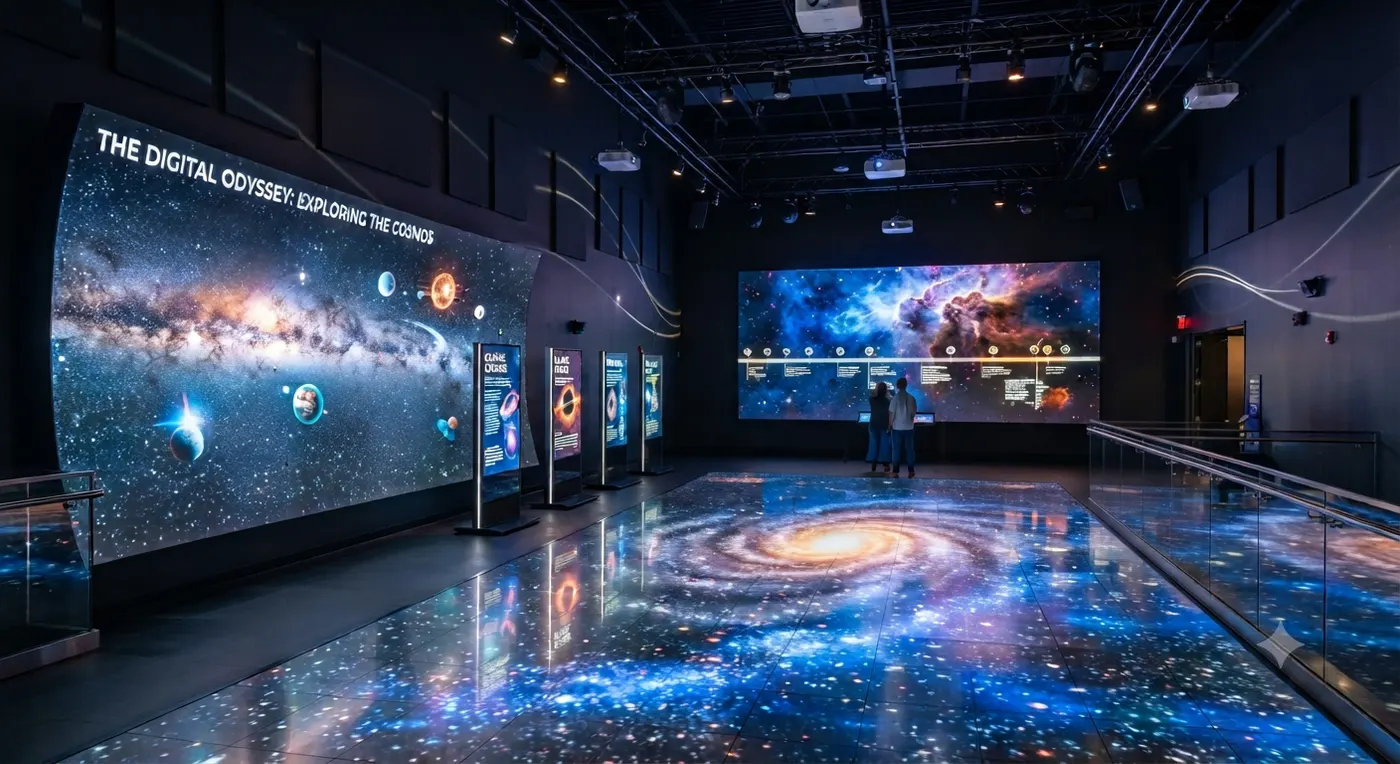
Immersive experiences
Audiovisual solutions for rooms that surround the visitor with imagery and put them inside the story.
The solution
Large-format displays and interactive monitors to create experiences to be lived, not just looked at, with equipment designed to run all day long.
- LED displays
- Interactive monitors
- SpaceImmersive room
- TechnologyLED + Interactive
- ResultMemorable visits
Recommended products for this solution (11)
 Interactive MONITOR INTERACTIVO TRAULUX SIN ANDROID SERIE STANDARD TX 55" PARA SALAS HASTA 20 M2 -12 PERSONAS
 LED displays PANTALLA LED HOLOGRÁFICA INTERIOR HOLOFIX PITCH 3.9 DE 3500 NITS PARA INSTALACIÓN FIJA 25X120
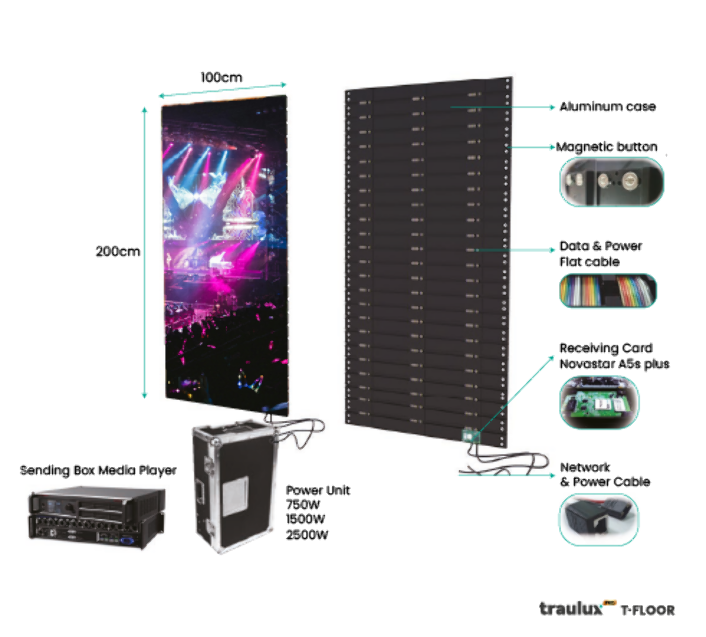 LED displays LED DE SUELO INDOOR 2.6 GOB 600nits 1000x2000mm
 LED displays PANTALLA DE LED FORMATO POSTER PLEGABLE PITCH 1.8 GOB 640x1920mm
 LED displays PANTALLA HOLOGRÁFICA PARA RENTAL T-RENT-HOLO 3.9 1000nits 1000x500mm
 LED displays PANTALLA LED INTERIOR TECNOLOGÍA HOB UFIX AVANT PITCH 1.8 800 NITS EN INSTALACIÓN FIJA CABINETS 16:9 Interactive MONITOR INTERACTIVO TRAULUX SIN ANDROID SERIE STANDARD TX 75" PARA SALAS HASTA 40 M2 - 30 PERSONAS Interactive MONITOR INTERACTIVO TRAULUX SIN ANDROID SERIE STANDARD TX 65" PARA SALAS HASTA 30 M2 - 25 PERSONAS
 Interactive KIT MONITOR INTERACTIVO SIN ANDROID SERIE STANDARD TX 55” + OPS WINDOWS 11 PRO. 20 M2 - 12 PERSONAS Interactive KIT MONITOR INTERACTIVO SIN ANDROID SERIE STANDARD TX 65” + OPS WINDOWS 11 PRO. 30 M2 o 25 PERSONAS Interactive KIT MONITOR INTERACTIVO SIN ANDROID SERIE STANDARD TX 75” + OPS WINDOWS 11 PRO. 40 M2 o 30 PERSONAS
No product matches those filters. Try removing one.
LED displays PANTALLA LED HOLOGRÁFICA INTERIOR HOLOFIX PITCH 3.9 DE 3500 NITS PARA INSTALACIÓN FIJA 25X120 LED displays LED DE SUELO INDOOR 2.6 GOB 600nits 1000x2000mm LED displays PANTALLA DE LED FORMATO POSTER PLEGABLE PITCH 1.8 GOB 640x1920mm LED displays PANTALLA HOLOGRÁFICA PARA RENTAL T-RENT-HOLO 3.9 1000nits 1000x500mm LED displays PANTALLA LED INTERIOR TECNOLOGÍA HOB UFIX AVANT PITCH 1.8 800 NITS EN INSTALACIÓN FIJA CABINETS 16:9 No product matches those filters. Try removing one.
Interactive MONITOR INTERACTIVO TRAULUX SIN ANDROID SERIE STANDARD TX 55" PARA SALAS HASTA 20 M2 -12 PERSONAS Interactive MONITOR INTERACTIVO TRAULUX SIN ANDROID SERIE STANDARD TX 75" PARA SALAS HASTA 40 M2 - 30 PERSONAS Interactive MONITOR INTERACTIVO TRAULUX SIN ANDROID SERIE STANDARD TX 65" PARA SALAS HASTA 30 M2 - 25 PERSONAS Interactive KIT MONITOR INTERACTIVO SIN ANDROID SERIE STANDARD TX 55” + OPS WINDOWS 11 PRO. 20 M2 - 12 PERSONAS Interactive KIT MONITOR INTERACTIVO SIN ANDROID SERIE STANDARD TX 65” + OPS WINDOWS 11 PRO. 30 M2 o 25 PERSONAS Interactive KIT MONITOR INTERACTIVO SIN ANDROID SERIE STANDARD TX 75” + OPS WINDOWS 11 PRO. 40 M2 o 30 PERSONAS No product matches those filters. Try removing one.
Frequently asked questions about immersive experiences
Can't find what you are looking for? Ask us directly.
What is an immersive audiovisual experience?
An immersive audiovisual experience is a space that combines images, video, sound and lighting to surround the visitor and make them feel part of the content. It can use visual surfaces on walls and floor to create digital scenery, narrative journeys or virtual environments. The result depends on the design of the space, the coordination of the content and the integration of the technologies.
What technologies can be combined to create an immersive experience?
An immersive experience can combine large-format LED displays, LED floor, projection, sound and lighting. Transparent displays or curved surfaces can also be included where the design calls for them. The choice depends on the geometry of the space, the ambient light, the viewing distance and the visitor's route. The playback and control systems must be able to coordinate the content across the different surfaces.
What does an LED floor display add to an immersive experience?
An LED floor display extends the visual content beneath the visitor's feet and links it with the images on the walls, creating a greater sense of continuity and depth. It can show landscapes, paths and visual effects coordinated with the rest of the space. To integrate it, check the load capacity, the conditions of use and the maintenance. If you want the images to react to footsteps, you need a detection system and compatible software; the floor display on its own does not provide interactivity.
What is the difference between an immersive experience and an interactive experience?
An immersive experience aims to surround the visitor with images, sound and other stimuli. An interactive experience lets their actions change the content, for example through touch displays, sensors or motion detection systems. The two can be combined, but an installation with LED displays is not interactive on its own: it needs input devices and compatible software to respond to the user.